Services Sanitaires Denis Fortier
Thetford Mines
Google rating :Google 3.8(13 reviews)
- Septic tank pumping
- Leaching field
The leaching field receives the water leaving the septic tank and spreads it into the soil, which completes the treatment. When it no longer does its job, water can rise to the surface or back up into the house.
Find a company by city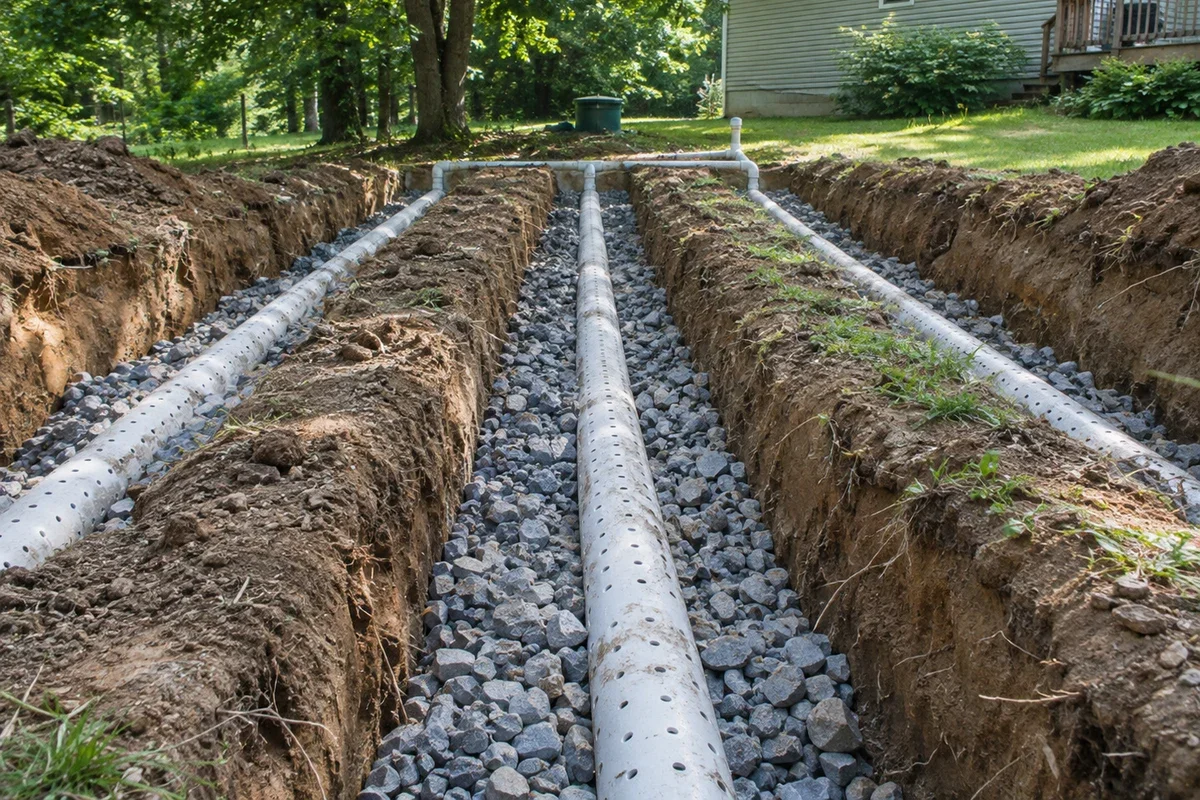
The regulation calls it a purification field: a network of pipes that spreads the effluent into soil able to filter it. Its design depends on how permeable the soil is and how far it sits above bedrock and groundwater, as set out in the site characterization study.
Lasting odours, soggy ground or unusually green grass over the field, slow drains or backups all call for a diagnosis. The company can check the tank, the pipes and the field before proposing any work.
Quebec’s Ministry of the Environment recommends keeping vehicles off the system’s components, not planting trees near the pipes and not connecting foundation or roof drains to it.
Replacing a leaching field is a change to the system: a municipal permit is required before the work. Check that the contractor holds an RBQ licence with subclass 2.4.
Thetford Mines
Google rating :Google 3.8(13 reviews)
Shawinigan
Saint-Tite
Hemmingford
Saint-Georges
It depends on the cause and the condition of the soil. An on-site diagnosis shows whether a targeted repair is enough or the field must be rebuilt; the municipality tells you when a permit is needed.
The Ministry of the Environment recommends keeping vehicles off the components, since they can break pipes or compact the soil.
Yes, it limits the amount of sludge that reaches the field. The regulation sets a minimum pumping frequency for the septic tank.
Add or update your listing for free and get requests from customers in your area.
List my business